



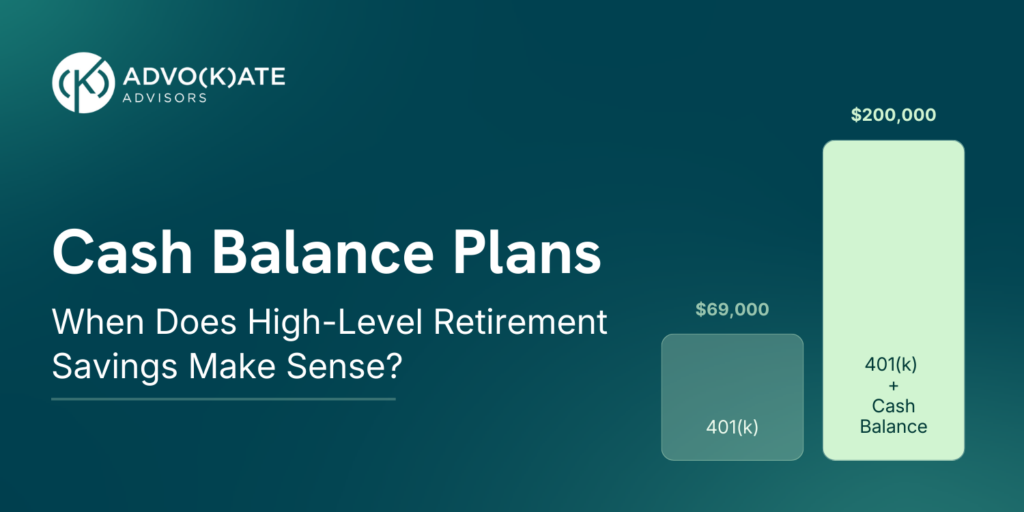
For business owners and highly compensated employees who have maxed out their 401(k) contributions and want to save significantly more while reducing their tax burden, cash balance plans offer a compelling alternative worth exploring.
What is a cash balance plan?
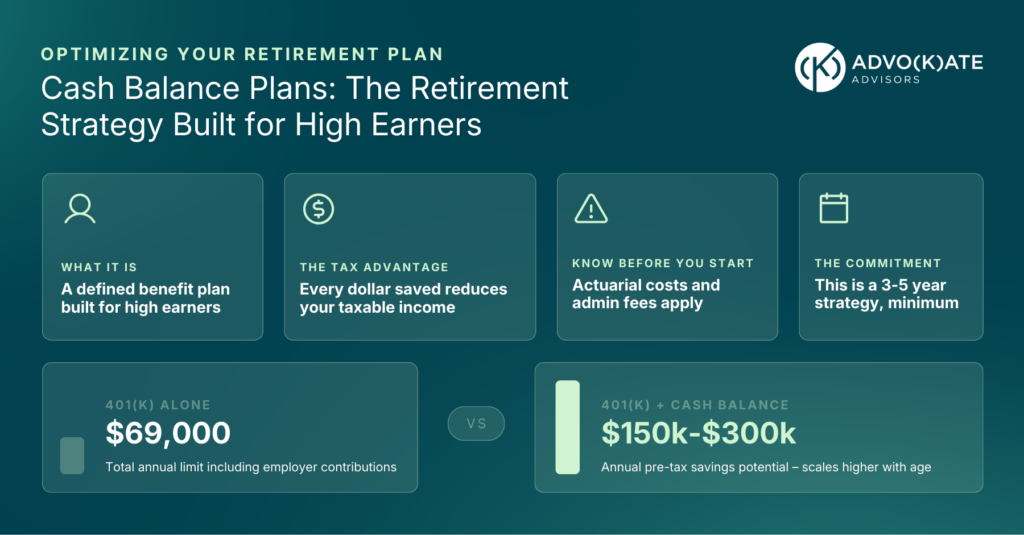
A cash balance plan is a type of defined benefit pension plan that combines features of a traditional pension with those of a defined contribution plan like a 401(k). Unlike a standard 401(k), cash balance plans offer significantly higher annual contribution limits and can be particularly valuable for business owners and highly compensated employees.
How much can you save in a cash balance plan?
Cash balance plans allow for much higher savings limits than 401(k) plans. Depending on age and compensation, business owners may be able to contribute $100,000, $200,000, or even more annually. These contributions are made on a pre-tax basis, meaning they reduce taxable income in the year they are saved.
What are the tax benefits of a cash balance plan?
Contributions to a cash balance plan are pre-tax, which means they are not taxable as income in the year you save them. This can result in substantial tax savings, especially for high earners looking to reduce their current tax burden while building retirement wealth.
What are the disadvantages of cash balance plans?
There are two main considerations. First, cash balance plans involve actuarial expenses to calculate required contributions and ensure the plan remains compliant. Second, there are additional administrative costs compared to a standard 401(k). These costs need to be weighed against the tax and savings benefits.
What kind of commitment is required?
Anyone saving in a cash balance plan needs to commit to funding the plan for at least three to five years to satisfy IRS and Department of Labor requirements. This is not a short-term strategy—it requires stable cash flow and a long-term commitment to the plan.